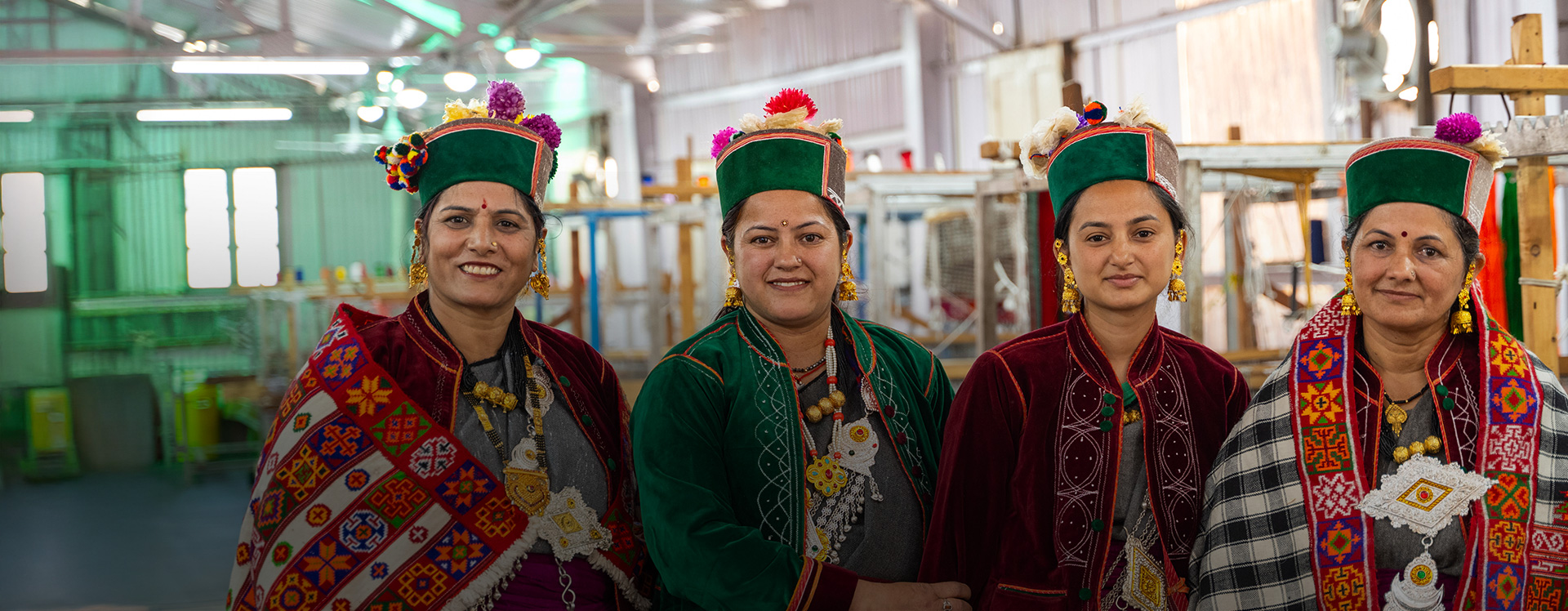
Cultural Heritage

Cultural Heritage is an expression of the ways of living developed by a community and passed on from generation to generation, including customs, practices, places, objects, artistic expressions and values. Cultural Heritage is a human creation intended to inform. As part of human activity Cultural Heritage produces tangible representations of the value systems, beliefs, traditions and lifestyles. Due to various human activities over time, cultural heritage has been either partially deteriorated or completely lost. JSW Foundation actively supports organizations and initiatives that preserve and promote art, culture, and heritage of India. This is achieved through setting up art precinct, restoring the heritage structures and preserving legacy by establishing museums thereby leading to enhancement of our cultural heritage.

SDG Mapping of JSW Initiatives & Projects

SDG 11: Sustainable cities and Communities

SDG 11 in its Goal 4 suggests strengthening efforts to protect and safeguard the world’s cultural and natural heritage. Undeniably JSW has worked a lot in contributing to this sustainable development goal. The following are few of the many examples where JSW has safeguarded, rebuilt or sustained the cultural heritage of an ancient place or community

  • Renovation of SNDT Kanyashala (renamed Jindal Centre for the Arts) in Mumbai.
  • Restoration of Chandramouleshwara Temple in Hampi, Karnataka.
  • Restoration of Keneseth Eliyahoo Synagogue in Mumbai.
  • Restoration of a 13th century village ‘Kuldhara’ in Jaisalmer, Rajasthan.
  • Restoration of Krishna temple complex in Hampi – a UNESCO World Heritage Site.
  • Preserving performing art form ‘Manganiyar’, Rajasthan.
  • Kaladham, an art and culture precinct at Torangallu, Karnataka.
  • Restoration of JJ School of Art, Mumbai.

In 2017, JSW Group had signed an MoU with the Government of Uttarakhand towards the reconstruction and restoration of Kedarnath which was destroyed in the flash floods in 2013. The company also committed to the reconstruction and restoration of the Adi Shankaracharya Kutir along with a museum, Ghats on River Saraswati, reconstruction of the Teerth Purohit (priests) houses and other infrastructural facilities related to the houses in Kedarpuri.

Hampi’s status as the UNESCO World Heritage Site is a testament of all its cosmological, spiritual and religious grandeur. The spiritual energy that the remains of the shrines in Hampi exude, is irrepressible. In 2000, Mrs. Sangita Jindal, emotionally and intellectually, took onus of restoring the Hampi. In partnership with Global Heritage Fund, the JSW Group has restored the 15th century Chandramauleshwar Temple in Anegundi, while it continues work on the Soumya Someshwar Temple.

SDG 9: Industry, Innovation and Infrastructure

The Company aims to address the efficient use of water with the aid of new and innovative technologies.

  • Vijayanagar plant has put up extensive instrumentation in water flow measurement to monitor water use on an hourly basis.
  • CCTV cameras, additional flow-meters, pH meters, and conductivity meters were installed for effective monitoring of water discharge.
  • Installation of CO2 injection system in Steel Melting Shop-1 (SMS) has improved thickener water quality in Vijayanagar further reducing freshwater consumption.
  • Through the implementation of zero liquid discharge (ZLD) in all the manufacturing units of JSW Steel to reduce the freshwater intake, JSW contributes to SDG 6. All the wastewater generated in the unit is treated through reverse osmosis and reused as process water or in horticulture. More details on the efforts of wastewater reduction and ZLD can be found on Framework Waste Water
  • JSW Steel has made the coke oven operations more water-friendly by replacing Wet Quenching by Coke Dry Quenching to cool hot coke.

Coke Dry Quenching

Coke Dry Quenching (CDQ) is a heat recovery system to quench red hot coke from a coke oven to a temperature appropriate for transportation. It is an energy-saving system in which, during the quenching process, the sensible heat of the red-hot coke is recovered and utilized for power generation or as steam. Unlike water quenching, which takes place in a span of a few seconds, CDQ is a gradual coke quenching system and improves coke strength and coke size distribution. CDQ results in cost reduction as even with lower quality coal good quality coke can be obtained. The CDQ coke has a lower moisture content (0.1 to 0.3%) which helps in reducing the Coke ratio of a Blast furnace. CDQ has an added benefit of a Steam generation of around 500-700 kg/t-coke and power generation of 140-185 kWh/t-coke. Due to all the above qualities, JSW is implementing CDQ in its upcoming projects as well and also slowly replacing existing wet quenching units in the existing plants.

SDG 6: Clean Water and Sanitation

  • In pursuance of our stated commitments to source water carefully and use it inefficient and innovative ways, we have laid down a few objectives towards which we will strive.
  • Vijayanagar plant is located in a water-scarce area and the unit has implemented numerous measures to secure adequate water for uninterrupted operations.
    • A new Water Reservoir of 1.3 TMC storage capacity ensures an adequate supply of water for uninterrupted operations of the plant, mitigating an operational risk as Vijayanagar is a water-scarce region.
    • Installation of a 500 m3/day Sewage Treatment Plant-Membrane Bio-Reactor (STP-MBR) and biodigester for treatment of sludge from STP and Canteen waste in Vijayanagar. The plant reuses 100% of industrial as well as domestic wastewater after proper treatment. More details of the STP and the initiatives taken to recycle/reuse waste effluent can be found at Waste Water Framework.
  • JSW Mines have also done tremendous work in line with wastewater reuse and in-turn conserve water
    • Implementing Scientific Water Conservation Plan
    • Constructing structures that will filter silt and clay which otherwise would have flown to fertile fields rendering it infertile.
    • Reducing the speed of water flow by constructing a series of check dams for reducing erosion and enhancing percolation.
    • Water Storage structures on streams for better water augmentation and its use of ecological purposes.
  • JSW Foundation, the CSR arm of JSW Group, also addresses the importance of responsible use of water and the adoption of water conservation activities by communities to ensure clean and safe drinking water availability for all. Some of the key works done by JSW Foundation are,
    • Restoration of conventional water sources to revive natural water bodies to facilitate effective soil and water conservation.
    • Partnered with the Government of Maharashtra in its ‘Jalyukt Shivar Abhiyan’ to build water conservation structures across villages in the Konkan region. Konkan, unlike many parts of Maharashtra, is not a drought-prone region; but being a coastal region, the water table is salty and being on the receding slope of Sahyadri ranges, the rainwater ends up in the sea. Thus, during summer, villagers of Jaigad and nearby villages complain of water scarcity not only for farming but for drinking purposes. JSW has tried to address this problem through its watershed management initiative. Under this project 21 small and medium-size dams have been constructed to arrest the rainwater and create a reservoir that could be used by villagers throughout the year.

For more details on the areas of focus and initiatives taken by the JSW foundation for the community visit here.

We use cookies on this website. Please indicate whether or not you accept our use of cookies. For more information read our Cookie Policy